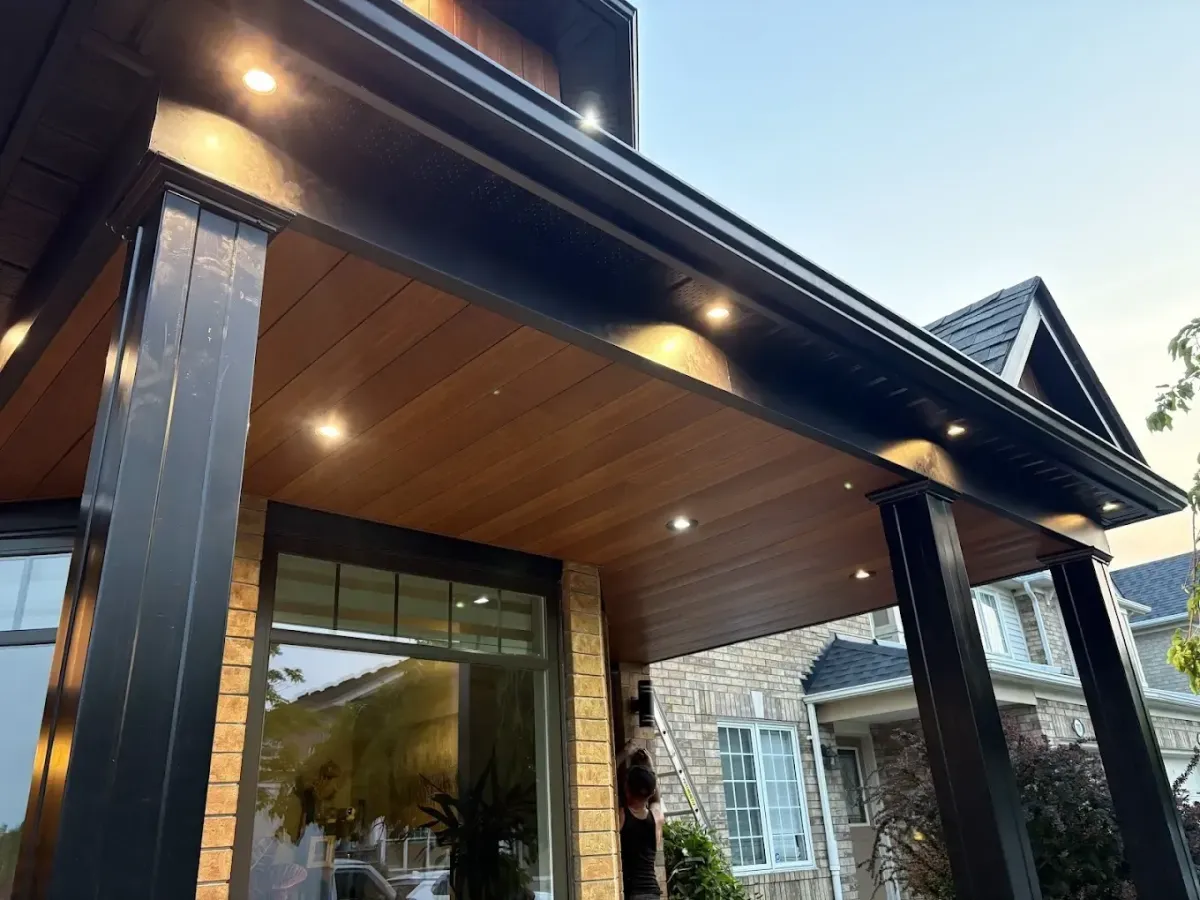
Soffit and Fascia Repair in Toronto: What Homeowners Need to Know
Soffit and Fascia Repair in Toronto: What Homeowners Need to Know
Most homeowners check their gutters after a storm. Maybe they glance at the shingles too. Almost nobody looks at the soffit and fascia, and that's usually the first thing our crews spot driving up to a job in Leslieville or Etobicoke: peeling paint, a sagging panel, a dark water stain nobody noticed from the ground.
Soffit fascia repair in Toronto is one of the busiest parts of our business, and it's not hard to see why once you've lived through a few of our winters. Wood and even aluminum take a beating here. This guide covers what soffit and fascia actually do, why our climate is so tough on them, and how to figure out if you need a repair or a full soffit replacement in Toronto.
What Soffit and Fascia Actually Do
Fascia is that flat board running along your roofline, right where the gutters attach. It's bolted directly to the rafters, which means it's also the first thing standing between wind-driven rain and your roof structure.
Soffit is underneath it, tucked into the underside of your roof overhang. A lot of homeowners assume it's purely cosmetic. It's not. Most soffit is vented, and that venting is doing real work keeping air moving through your attic (we'll get to why that matters in a minute).
Between the two, your eaves stay sealed and your roofline looks finished instead of unfinished. Once one of them starts to fail though, water doesn't wait around.
Why Toronto's Climate Is Especially Hard on These Materials
We don't have gentle weather here. One month it's humid enough to warp wood, the next it's below freezing, and that back-and-forth is exactly what wrecks fascia boards over time.
A few patterns show up on almost every service call. Gutters packed with leaves from big old maples and oaks overflow right onto the fascia and just sit there soaking it. Ice dams form along the eaves in January and shove meltwater back up under the shingles. A slow roof leak travels down a rafter and shows up as a stain three feet away from where the actual leak is. Squirrels find a soft spot in the soffit and turn it into a door. And in a lot of homes built before the 90s, the original wood soffit and fascia is simply worn out. It's had a good run.
Signs You Need Soffit and Fascia Repair
Next time you're out front, actually look up. Soft or spongy soffit panels, peeling paint along the fascia, water staining that trails down from the roofline, cracked or split boards, a gap where the soffit meets the wall, or evidence that something furry has been getting into the attic. Any of these is worth a closer look.
Don't sit on it. Once moisture gets behind a board, rot moves fast, and a $400 repair this spring can turn into a much bigger bill by fall.
Repair or Go With a Full Replacement?
It comes down to how widespread the damage is. Under about 25% of the fascia affected, with soffit that's still solid, a spot repair is usually the right call. If you're finding soft spots in two or three different areas, or the home still has its original wood soffit and fascia, replacement tends to save you money in the long run rather than patching the same house every couple of years.
Picking a Material
Aluminum is what we install most, by a wide margin, across the GTA, and once you've seen what a Toronto winter does to the alternatives, it's easy to understand why. Squirrels can't chew through it, it won't warp, and homeowners tend to forget it's even there for a decade or more. Vinyl comes in cheaper, but ask anyone whose vinyl soffit cracked during a cold snap in February how that worked out. Wood still has a place on older character homes where matching the original look matters, just budget for repainting every few years. Composite is the priciest route, though it holds up about as well as aluminum does. For most homes in this city, aluminum soffit and fascia is the option that makes sense long term.
Ventilation Isn't Optional
Soffit vents are how your attic breathes. Skip proper ventilation and moisture builds up all winter, which is a fast track to mould. In summer, trapped heat bakes your shingles from underneath instead of letting it escape. Bad ventilation is also a major reason ice dams form in the first place. When we do soffit replacement in Toronto, we size the new vents to the actual attic, not just whatever was there before.
Soffit and Fascia Repair Cost in Toronto
Cost depends on how much work is involved and what material you go with. A minor repair, one or two boards, generally runs $300 to $800. A section replacement lands somewhere between $1,500 and $3,000. A full soffit and fascia replacement across the whole house is typically $3,500 to $9,000, more if the roofline is complex or the roof sits high off the ground.
Pair It With Your Gutters
If your gutters need replacing too, it almost always makes sense to do everything at once. One crew, one setup, one project instead of two separate invoices for labour you'd otherwise pay for twice. It also means the gutters, soffit, and fascia actually integrate the way they're supposed to, rather than getting bolted together after the fact.
Why Toronto Homeowners Call Infinity Gutters & Exteriors
We've been doing this since 2014, working on homes right across the GTA, gutters, soffit, fascia, siding, and roofing. Every job comes with a written warranty, and we stick to materials we'd be comfortable putting on our own houses.
Get a Free Soffit and Fascia Quote
If your soffit or fascia is showing any of the signs above, don't let it ride through another Toronto winter. Call (647) 467-2990 or visit infinitygutters.ca to book a free quote, no obligation.
