Maple Keys
Winged seeds can bridge coarse openings, lodge edge-first, and collect other debris. Fine openings reduce entry but the surface still needs occasional inspection.
Talk with Infinity Gutters & Exteriors about gutters, siding, roofing, windows, doors, soffit, fascia, or full exterior project support.
Request a Quote Call 647-467-2990Reduce recurring gutter buildup from leaves, maple keys, oak debris, pine needles, and roof grit with a protection system selected for your roof, tree cover, and existing eavestroughs. Infinity Gutters & Exteriors offers a local alternative to national gutter-guard brands: a practical inspection, a clear scope, transparent product-specific pricing, and no high-pressure sales presentation.
Large leaves are the easy test. Toronto's mature urban canopy includes large silver maples and other maples, oaks, and conifers. The right system also needs to manage narrow pine needles, winged maple keys, oak leaves, shingle granules, pollen film, and winter conditions without restricting roof runoff.
Winged seeds can bridge coarse openings, lodge edge-first, and collect other debris. Fine openings reduce entry but the surface still needs occasional inspection.
Thin needles pass through many screens and brush systems. Fine micro-mesh is generally the strongest option where conifers dominate.
Broad oak leaves can mat together when wet and cover exposed guard surfaces. The guard angle and access for occasional surface clearing still matter.
Flat, wet leaves can mat over any surface. The guard angle, roof pitch, nearby canopy, and routine surface clearing influence water flow.
Valleys and steep roof sections can concentrate water. Guard selection must account for real flow paths, not just the product's debris claim.
Guards do not prevent ice dams. Snow, meltwater, refreezing, insulation, ventilation, and roof-edge conditions still require attention.
Every category has a tradeoff. The best fit depends on the smallest recurring debris, water concentration, roof and gutter condition, access, and the maintenance the homeowner is prepared to perform.
| Guard type | Advantages | Limitations | Toronto fit | Maintenance |
|---|---|---|---|---|
| Micro-mesh | Strong fine-debris filtration Blocks leaves, maple keys, many pine needles, and much roof grit. | Surface can collect film Pollen, grit, and wet debris may reduce flow until cleared. | Often the strongest candidate for mixed maple, oak, and conifer canopy. | Inspect and brush or rinse the exposed surface as conditions require. |
| Reverse curve | Sheds large debris Uses surface tension to direct water into a narrow opening. | Fine debris and overshoot Needles can enter the slot; concentrated runoff may overshoot. | Can suit primarily broadleaf debris after roof-flow assessment. | Check the intake slot and high-flow roof valleys. |
| Foam inserts | Low entry cost Simple DIY placement and no exposed metal cover. | Debris and aging Fine material can settle in pores; foam can retain debris and deteriorate. | Usually a short-term option rather than a premium Toronto installation. | Frequent inspection; removal may be required for cleaning. |
| Brush guards | Simple and removable Stops some large leaves and is easy to lift out. | Needles lodge in bristles Seeds and fine debris can collect within the brush and gutter. | Limited fit below maple or pine canopy. | Remove, clean, and reinstall periodically. |
| Screen / perforated | Good large-leaf barrier Durable metal options provide open water paths. | Coarser filtration Needles, seeds, and grit can pass through many openings. | Can work where large leaves are the main issue and fine debris is limited. | Clear the top and periodically inspect the trough below. |
Before retrofit installation, we assess whether the existing eavestrough is securely attached, properly pitched, free of recurring leaks, and large enough for the roof area and concentrated runoff. Installing a guard over a weak or poorly draining system can hide the original problem instead of solving it.
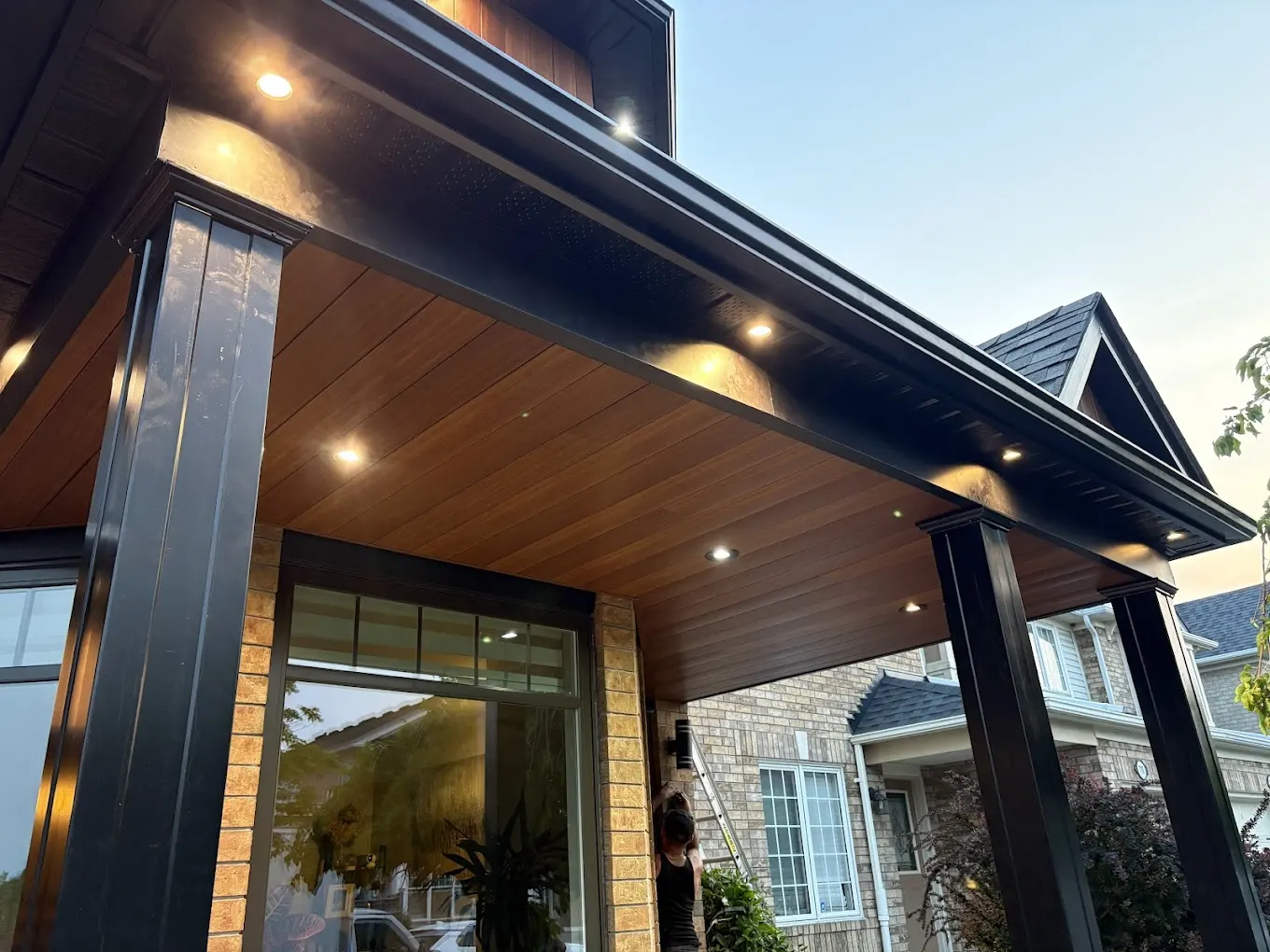
A retrofit can make sense when the gutter is sound, properly pitched, securely fastened, and compatible with the selected guard. Cleaning and correcting small defects before covering the system is essential.
Combining guards with a new seamless gutter system allows the profile, outlets, hangers, pitch, and protection system to be planned as one drainage assembly.
Current Ontario market guides show a wide installed range because screen, micro-mesh, roof access, storeys, corners, preparation, and repairs vary. Infinity Gutters measures the actual runs, identifies the product, separates preparation or repair work, and provides a property-specific written quote.
A general 2026 planning range for professionally installed aluminum-screen through micro-mesh systems—not a guaranteed Infinity Gutters price. One Ontario guide lists guards installed with new eavestroughs at roughly $6–$10 per foot as an add-on; retrofit work is often higher because access, cleaning, and setup happen separately.
Also consider reduced ladder exposure, fewer emergency blockages, surface maintenance, warranty terms, and whether the current gutters will last long enough to justify a retrofit.
Final pricing requires an on-site assessment. Taxes, access equipment, cleaning, repairs, removal of old guards, downspout work, and replacement gutters may be separate.
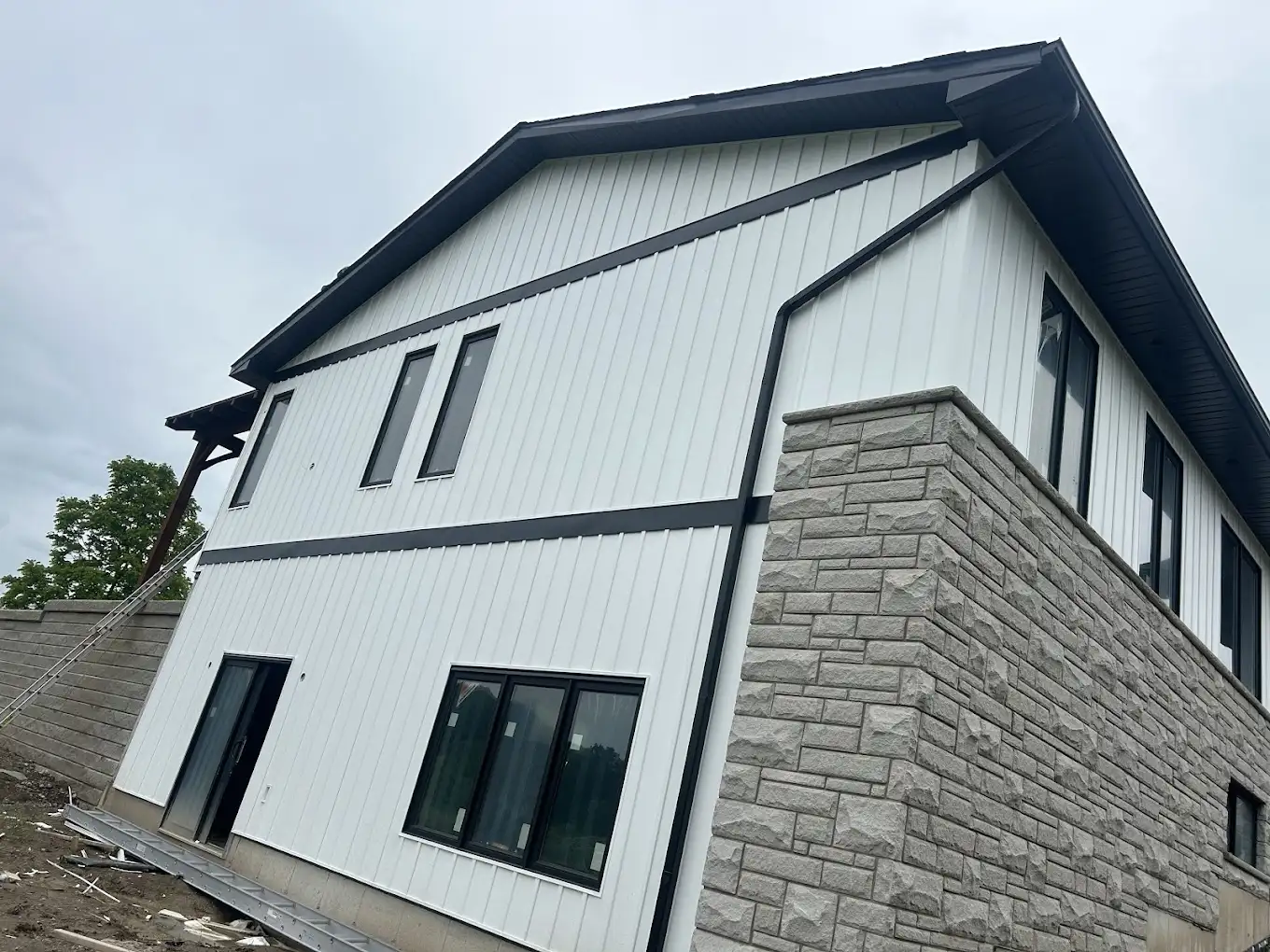
Guard warranties vary by manufacturer, product, installer, and application. Before work begins, confirm what covers materials, workmanship, clogging claims, transferability, registration, exclusions, and required maintenance. No guard eliminates the need to inspect roof valleys, surfaces, outlets, and downspouts.
Gutter guard and exterior project support is also available throughout North York and Vaughan, with dedicated local pages for gutters, roofing, siding, windows, doors, soffit, fascia, and coordinated exterior work.
Tell us about your trees, current cleaning cycle, gutter condition, and problem areas. We will help you compare protection options and decide whether retrofit or new gutters offer the better long-term fit.